40: Keith Haring X Hieronymus Bosch
Check out Part 1 👁>👁:
We are back with another series on — not one but TWO - monumental works by two monumental artists:
Keith Haring’s stunning “Altarpiece / The Life of Christ” from 1990 and Hieronymus Bosch’s enigmatic triptych “Garden of Earthly Delights” from 1490-1510.
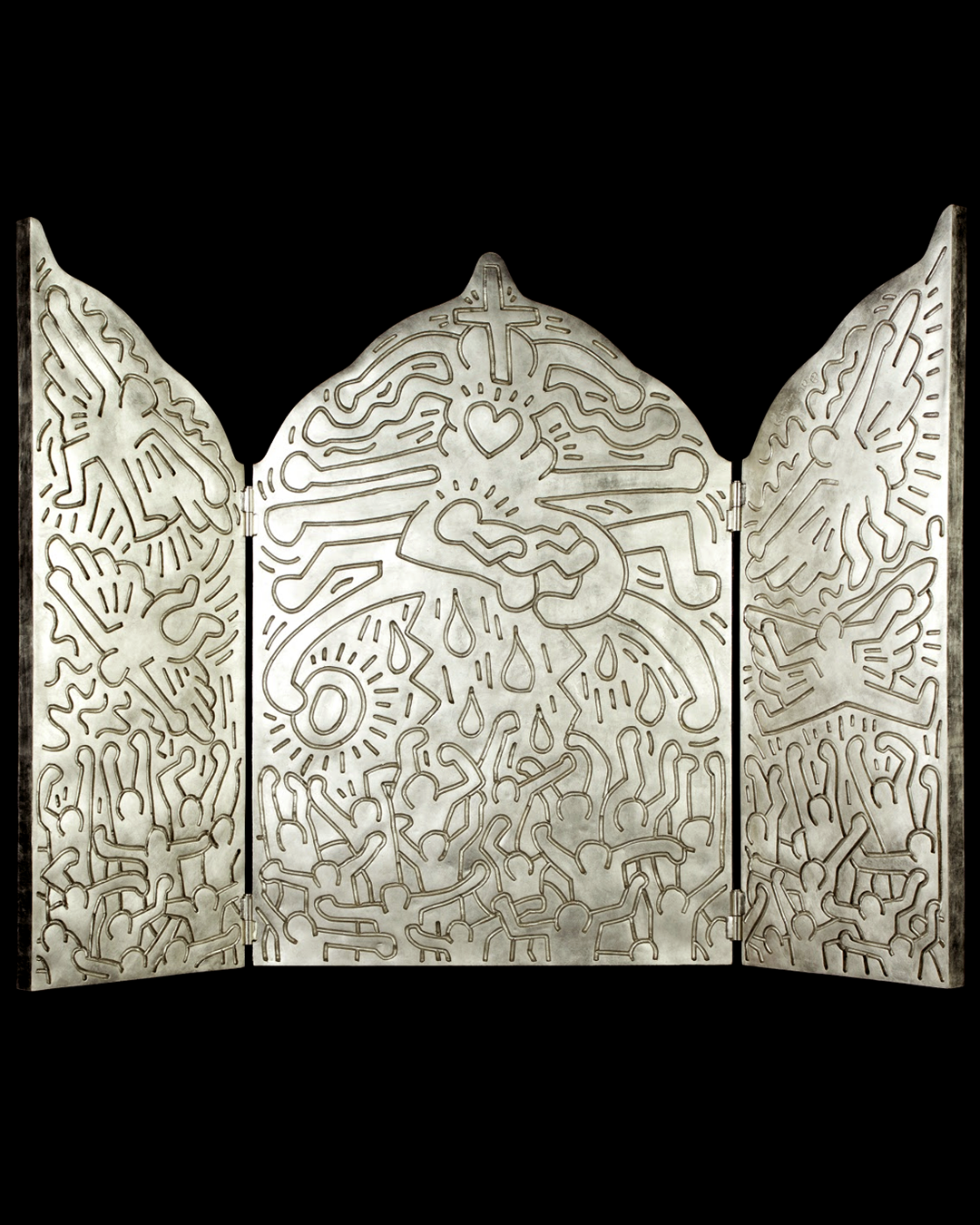
Keith Haring’s last work, “Altarpiece / The Life of Christ” 1990. Bronze with gold white patina.
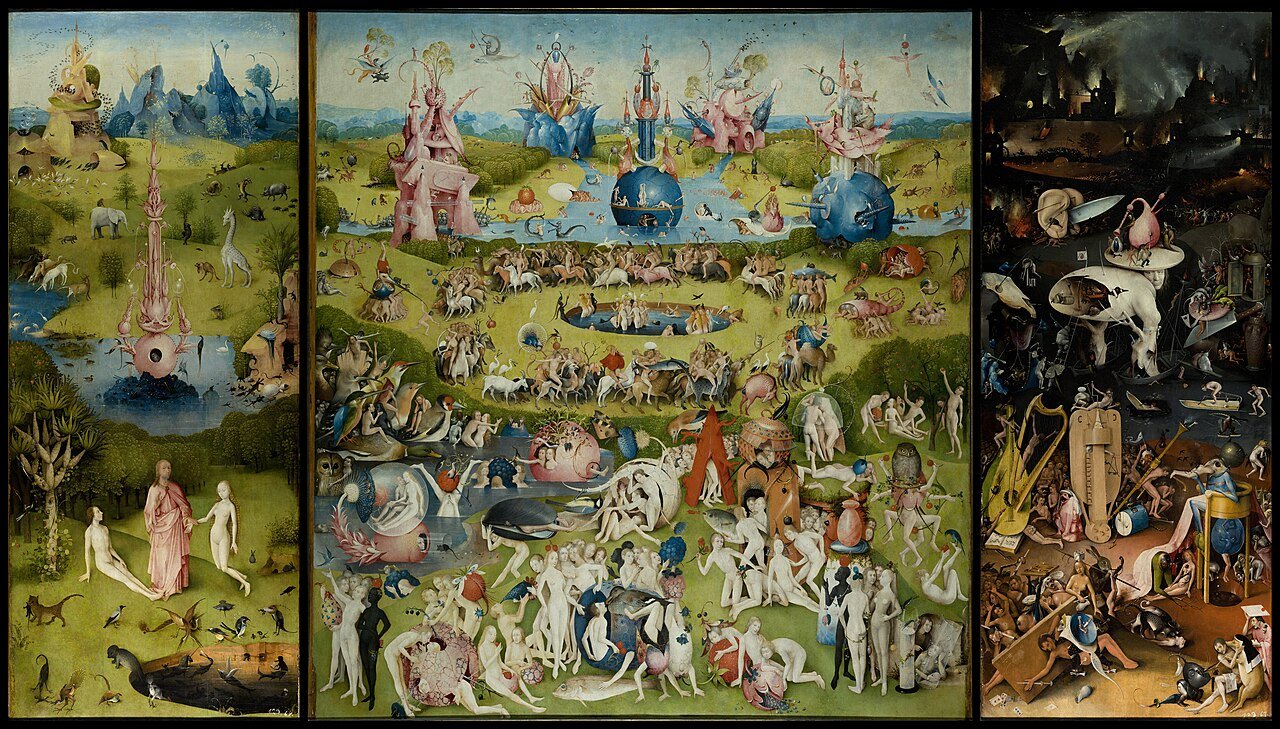
Hieronymus Bosch, “The Garden of Earthly Delights” c. 1490-1510. Tempera on panel.
Believe it or not, while these two works were created centuries apart, they touch on a similar theme of humanity which is what we will be exploring in this series so buckle up!
This is a VERY robust episode so we highly encourage you to listen/watch (though pref. watch for the best experience).
Consider this newsletter just a taste because we cover soooo much ground!
In Part 1, we begin by introducing Hieronymus Bosch, one of art history’s most mysterious artists, and the culture of his time in the 15th century Netherlands.
Records of Bosch’s life are scant and, unfortunately for us, he didn’t leave behind any juicy journals or titillating letters adding to his mystique.
So while there isn’t a lot out there on Bosch - there is enough that we can safely surmise. He was born, lived, and died in s’Hertogenbosch (or Den Bosch for short) located in southern Netherland. It was such a religious city that it was considered a Catholic hub. With that in mind, it’s not unusual that all of Bosch’s works have religious themes.
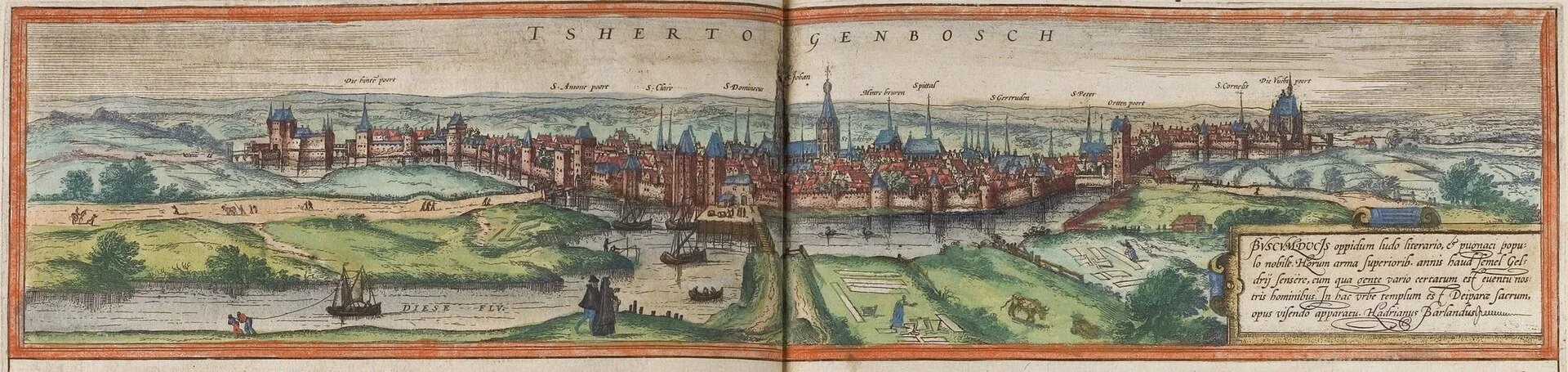
A 16th-century bird's-eye view engraving of 's-Hertogenbosch (Den Bosch), Netherlands by Georg Braun and Frans Hogenberg in their famous town atlas Civitates Orbis Terrarum around 1572.
We briefly touch on his early work of “Adoration of the Magi” from c. 1475. Unlike most other paintings of this theme, it’s dominant color is a sort of teal blue. When you start to look more closely, details start to reveal themselves as actually kind of funny, like an angel’s wings getting stuck in a tower.
It’s early in his career, but Bosch’s sense of humor already makes its way into his work, as he seamlessly combines funny little details with current day fears (an army waving an Ottoman Empire flag in the background) into what is obsensibly a religious painting.

Hieronymus Bosch, “Adoration of the Magi”, 1475. Tempera on panel.
While looking at “Adoration of the Magi”, we start to speculate what ingredients might be in his secret sauce that would reach peak in “Garden of Earthly Delights” decades later.
We say ‘speculating’ because, due to aforementioned scant records on the man, that is what historians have done for centuries as far as what really inspired “Garden”.
The most outlandish theory suggests Bosch was part of a clandestine nudist colony, the Adamites . . . I mean, why else would someone paint hundreds of nude bodies — and butts — on a triptych which is basically three paintings (if we’re getting technical)? Can you spot the coy Adamite (top row, second from the right).
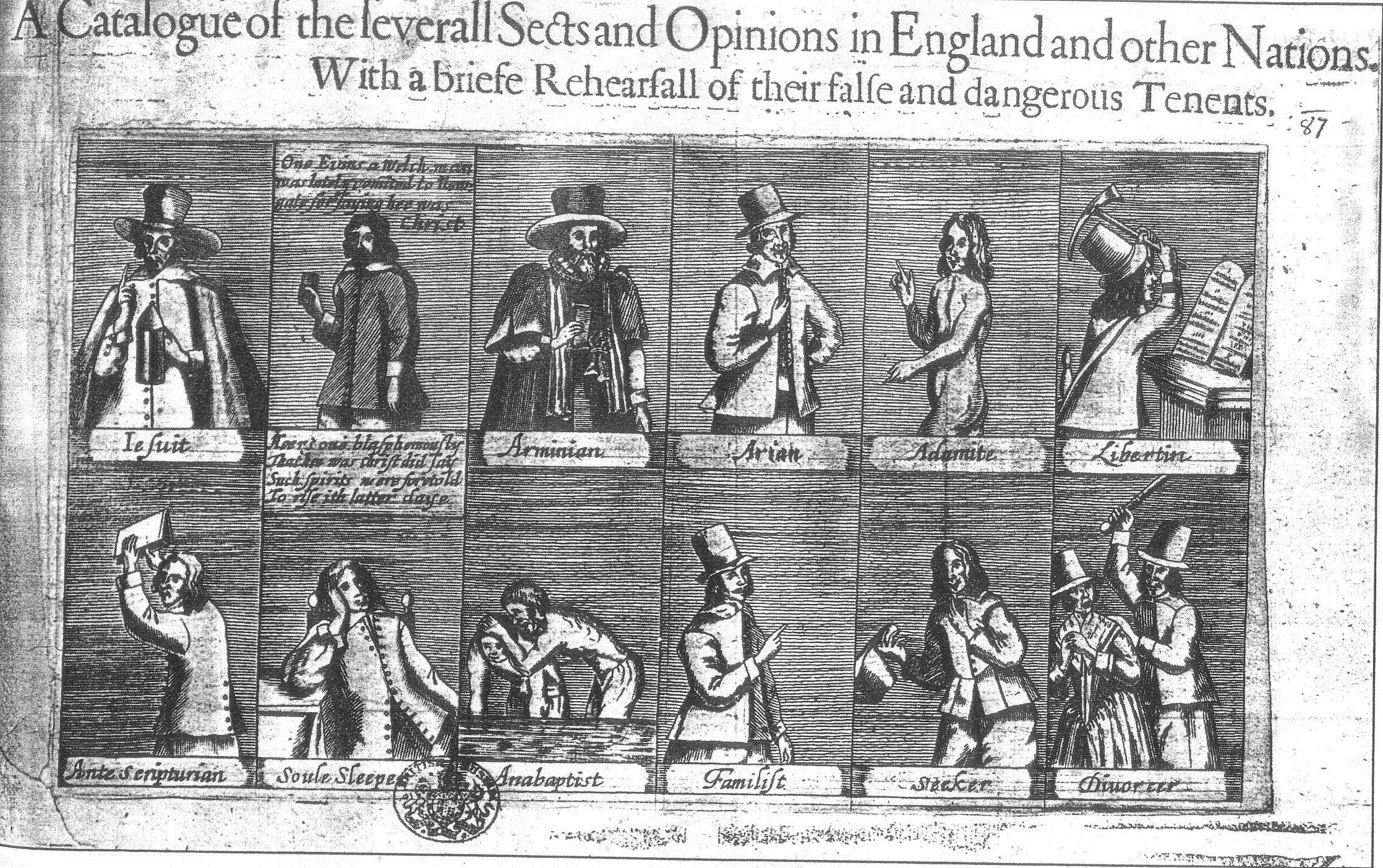
A 1647 propaganda broadsheet denouncing English dissenters.
Guess you could simply be butt-obsessed under the guise of being “judgy” for God.
Speaking of judgemental, fastforwarding 500ish years to the 1980s, now more than ever people were simply giving less fucks and letting their freak flags fly high. This was especially true in New York City, the flourishing epicenter of art, music, sex and drugs. And of course the gay capital of the US.
And this is the environment Keith Haring came of age in after leaving his small hometown of Kutztown, PA.
In his teens, he had been a Jesus Freak and became obsessed with their ideologies but also their illustrations in their Hollywood Free Newspaper that would leave an impression on him and show up in his work years to come.
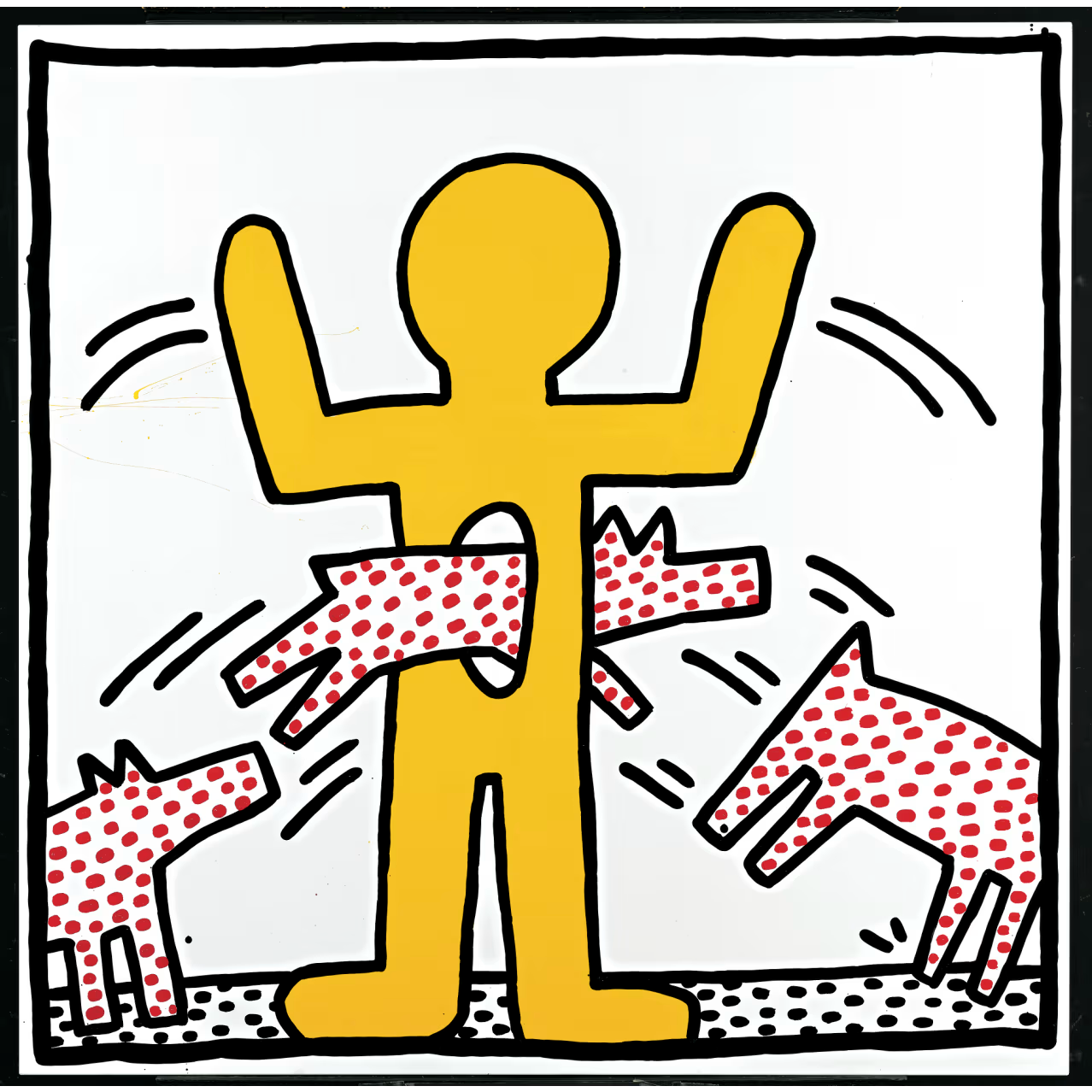
Keith Haring, “Untitled”, c. 1982.
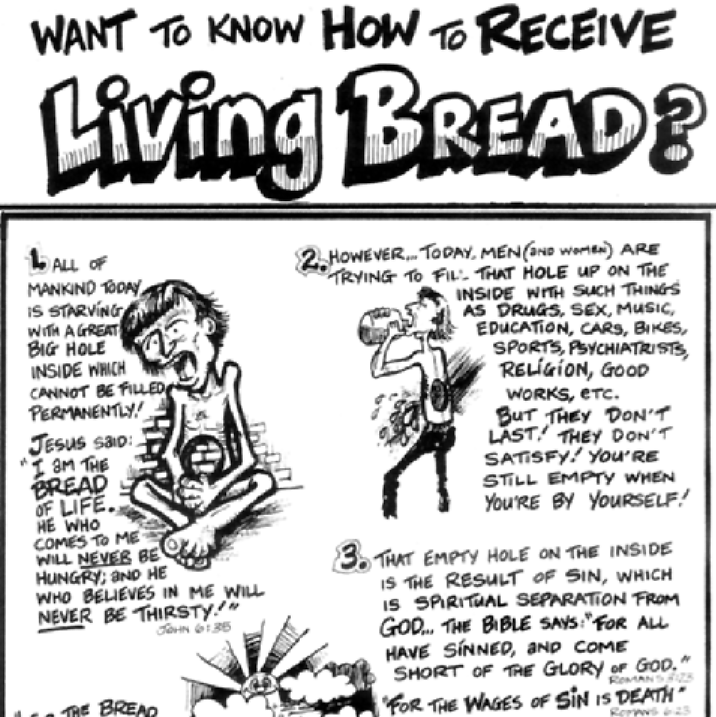
Excerpt detail from the Hollywood Free Paper featuring people with insatiable holes in their torsos c. mid-late 1970s.
Keith also found himself drawn to street graffiti, particularly that of the subway. It was here where he first experimented with what would soon become his iconic symbols like the radiant baby, dog-men, pyramids, and angels (so much more!). Between 1980-1985, he cranked out an estimated 10,000 drawings - that’s about 40 a day.
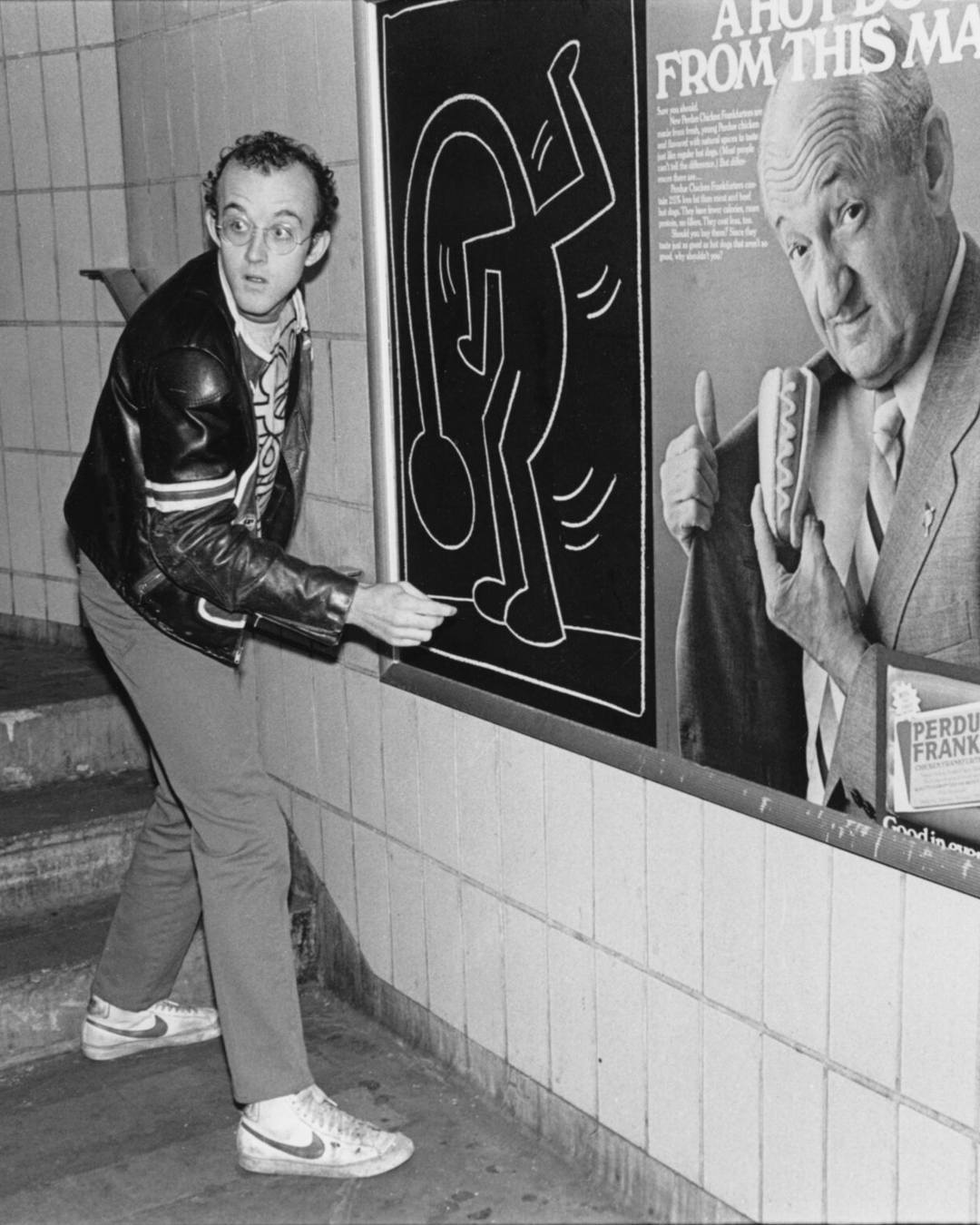
And in the subway is where he would first see the work of his soon-to-be longtime collaborator, teen Angel Ortiz aka LAII aka LA Rock.
During their collabs, Keith would typically start with the figures and then Angel would fill the rest in, almost in a horror vacui manner. We think his graffiti style almost looks like Maruchan noodles - organic and dense. What do y’all think?
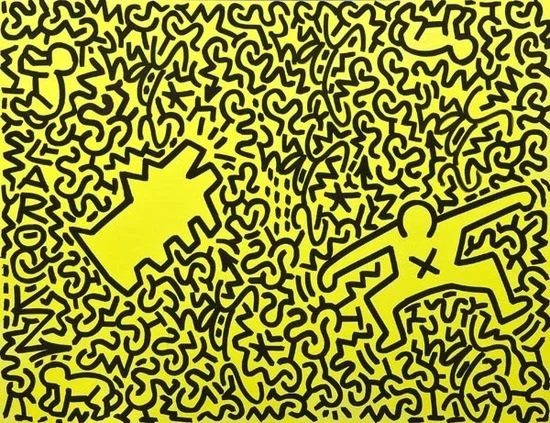
Keith Haring and Angel Ortiz (LAII), “Untitled”, acrylic and marker on pen board.
Unfortunately, no Keith Haring story would be complete without Ronald Reagan, who to the misfortune of thousands of AIDS victims and marginalized communities, served as the 40th president of the United States from 1981 to 1989.
Who voted him in? At first, Southern Conservatives, mostly in response to the increasingly liberal media: scantily clad pop stars singing risque lyrics (nothing compared to today, laughable!). Queer folks were now more visible than ever, further igniting the hate that would give rise to “Christian” televangelists.
And this is where we leave off for now! We will thread these needles in Part 2 where we will mostly focus on the work.
Tell us your thoughts! We love to hear from you all.
Stay tuned for Part 2!
Featured Music:
Support the show!
If you haven’t yet, please leave us a 5 star review on your pod player of choice so we can reach new listeners like you!
We would love your support on Patreon as those funds help support our research in the form of books and travel (it makes our visit to see some of these works in person possible!).
You can also support us by purchasing some merch!
Thank you, thank you, thank yooouuuuu to our lovely Patrons and for those of you who have purchased merch from us - it means so much to us!
We say this a lot and we mean it every time: we are so,so grateful for your support - we couldn’t do it w/o you all!!